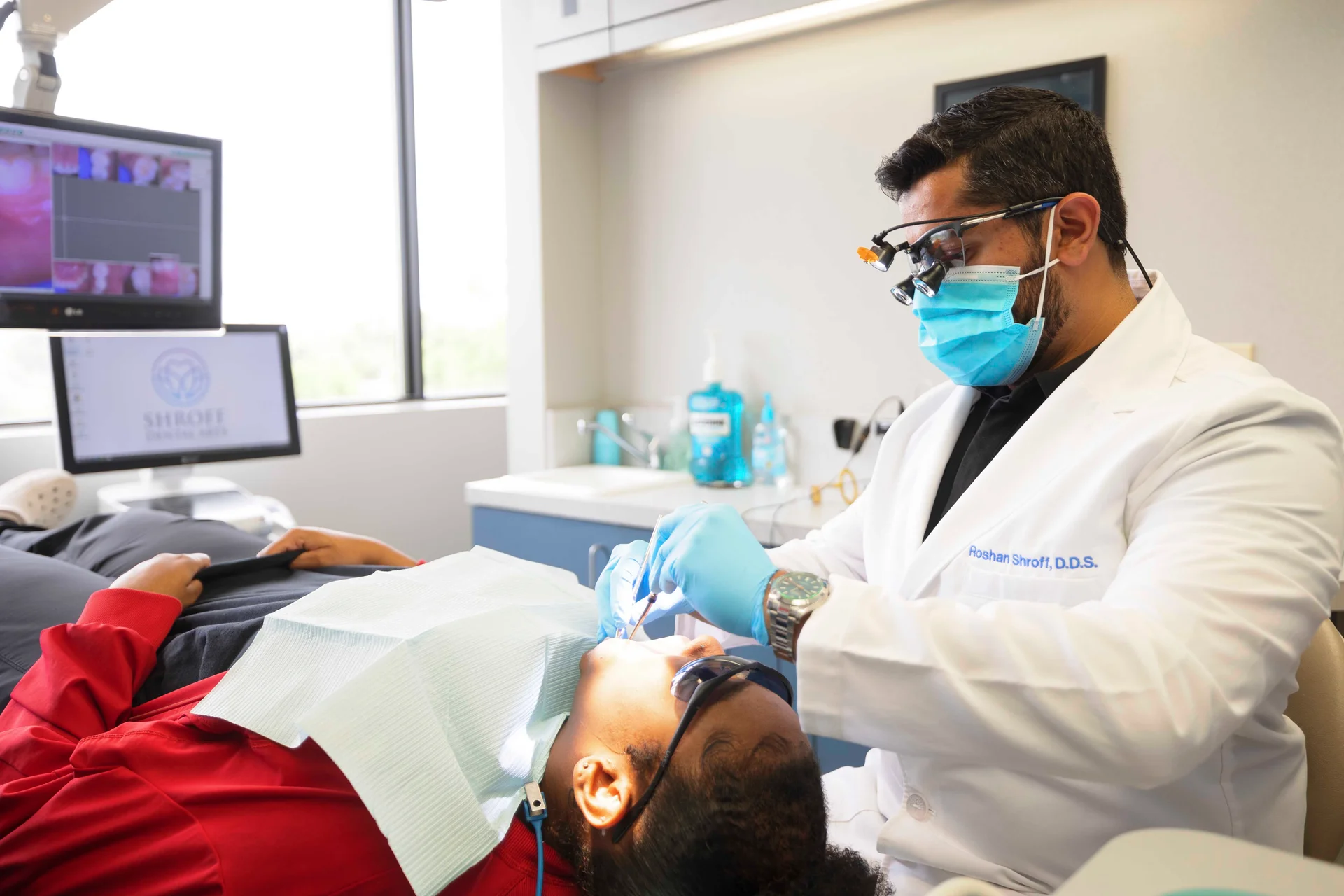


Dr. Shroff carefully examining a patient’s gums

General & Preventive Dentistry · Gum Disease / Periodontal Treatment

Gum Disease Treatment in Centennial, CO That Stops Damage Early

Bleeding gums or stubborn bad breath are easy to brush off, but they are often the first signs that something is happening beneath the gum tissue. At Shroff Dental Arts, Dr. Shroff uses digital X-rays and intraoral photos to show you exactly what is going on with your gums, explains what each finding means, and builds a treatment plan to get your gum health back on track. Most major PPO plans are accepted, and the in-house membership plan includes periodontal maintenance for patients without insurance. If your gums have been bothering you, this is a good time to reach out.

Signs You May Have Gum Disease

Gum disease does not always announce itself loudly. Some patients come in for a routine exam and learn they have early-stage disease without ever noticing a symptom. Others notice one or two of the following and assume it is normal:

  • Gums that bleed during brushing or flossing
  • Red, puffy, or tender gum tissue
  • Persistent bad breath that does not go away
  • Gums that appear to be pulling away from the teeth
  • Teeth that feel loose or have shifted
  • Sensitivity along the gum margin
  • A change in how your bite feels

Any one of these is worth mentioning at your next appointment. Caught early, the treatment is often straightforward and manageable.

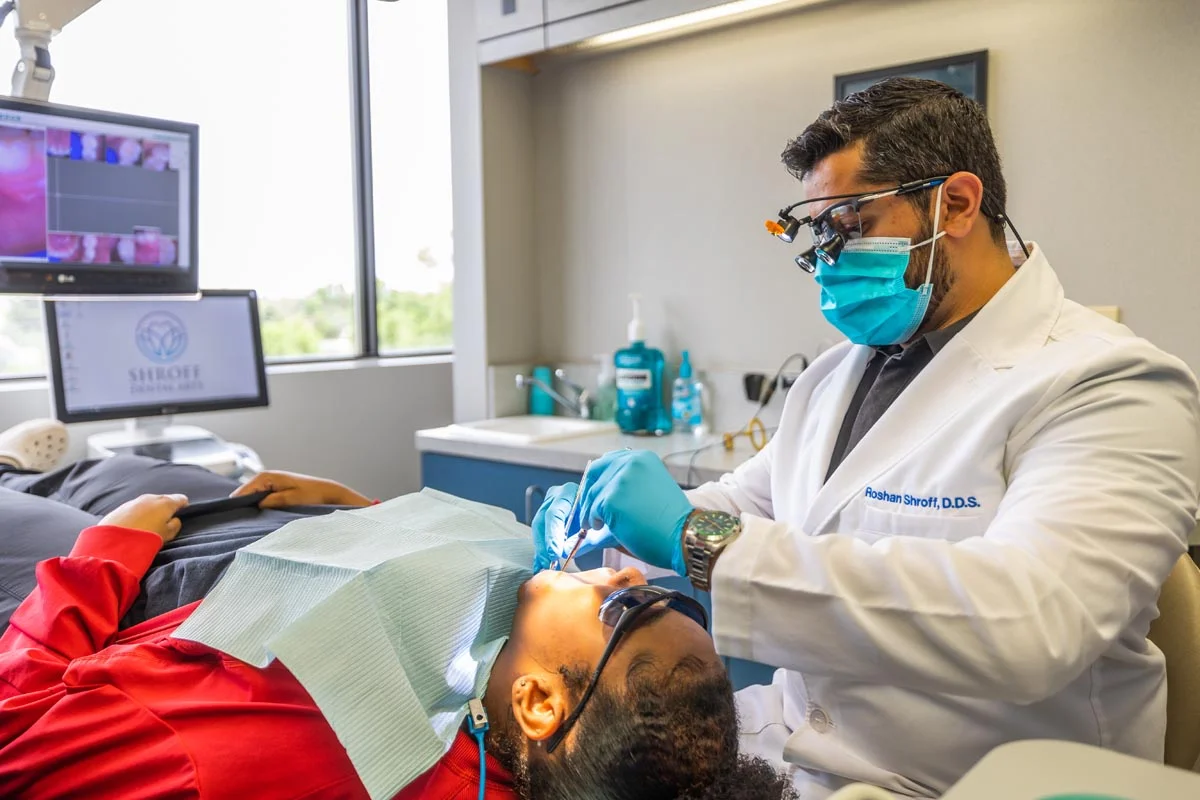
Dr. Shroff wearing loupes and a mask while examining a patient’s gums
Dr. Shroff listening as a patient describes his symptoms in the treatment chair
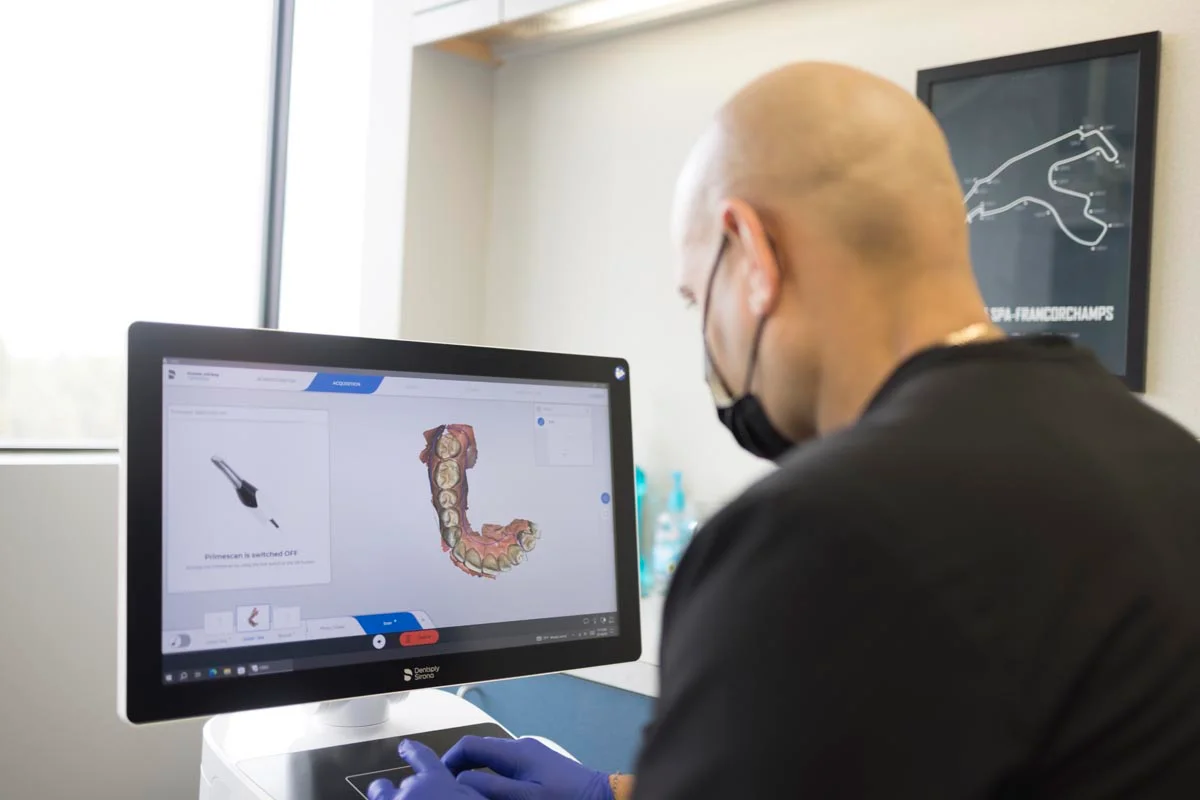
Team member reviewing a 3D digital scan of a patient’s teeth

Why Treating Gum Disease Early Protects More Than Your Gums

The bacteria behind gum disease do not stay put. Left alone, they move deeper into the tissue and bone that hold your teeth in place. Beyond the mouth, untreated periodontal disease has been associated with other health concerns, and treating it promptly is worth taking seriously.

Early periodontal treatment in Centennial also keeps costs lower. A deep cleaning addressed now is far less involved than managing advanced bone loss or tooth replacement later.

What Happens If Gum Disease Goes Untreated

When infection spreads deeper, the bone supporting your teeth begins to break down. Pockets form between the gums and teeth, giving bacteria more room to accumulate. Teeth can loosen, shift, or eventually require extraction. At that stage, restoring the smile involves implants, bridges, or dentures, and none of those conversations are as simple as the one you would have had earlier. Damage from advanced gum disease is often permanent, which is why catching it at the gingivitis stage, when it is often still reversible, matters so much.

Periodontal Treatment Options at Shroff Dental Arts

The right treatment depends on how far the disease has progressed. Dr. Shroff examines the depth of any gum pockets and the extent of any bone changes before recommending a path forward.

01

Scaling and Root Planing

This is the most common form of periodontal treatment, often called a deep cleaning for gum disease. Scaling removes plaque and tartar that has built up above and below the gum margin, where a standard cleaning cannot reach. Root planing smooths the tooth roots so gum tissue can reattach properly and bacteria have fewer places to hide. The two steps are done together, typically over two visits, with the mouth treated one side at a time.


02

Periodontal Maintenance

After active treatment, gum disease requires ongoing monitoring. Most patients move to a maintenance schedule with more frequent cleanings, typically every three to four months, so Dr. Shroff can track gum pocket depths and catch any recurrence early. Because he is your dentist at every visit, those measurements are tracked consistently over time, not re-evaluated from scratch at each appointment.

Dr. Shroff talking a patient through his exam findings

What to Expect at Your Periodontal Appointment

The first step is a thorough exam. Dr. Shroff measures pocket depths around each tooth, reviews X-rays for signs of bone change, and looks at the full picture before recommending treatment. If a deep cleaning is needed, the area is numbed so you feel pressure but not pain. Most patients find the procedure more manageable than they expected. After the appointment, some tenderness is normal for a few days, and you will leave with clear instructions for at-home care and a plan for follow-up.

For patients who feel anxious, nitrous oxide is available. Bring it up when you call and the team will note it for your visit. You can also learn more about sedation options through the general and preventive dentistry page, or explore same-day emergency appointments if you have a concern that feels urgent. Regular periodontal monitoring pairs well with oral cancer screening, which Dr. Shroff performs as part of a comprehensive exam.

Frequently Asked Questions About Gum Disease Treatment

How do I know if I have gum disease?

The most common signs are gums that bleed when you brush or floss, persistent bad breath, and gum tissue that looks red or swollen. Some people have no noticeable symptoms at all, which is why a periodontal exam at a regular checkup is the most reliable way to know for sure. If anything on the symptoms list above sounds familiar, it is worth a conversation.

Is a deep cleaning painful?

Most patients are surprised by how manageable it is. The area is numbed before treatment begins, so you should feel pressure but not sharp pain during the procedure. Some tenderness in the days after is normal and usually mild. If the idea of the appointment makes you nervous, ask about nitrous oxide when you schedule, and Dr. Shroff will explain exactly what to expect before anything starts.

How many visits does periodontal treatment take?

Scaling and root planing is typically completed over two visits, treating one side of the mouth at a time. After that, most patients move into a maintenance schedule with more frequent cleanings to keep the infection from returning. The specific plan depends on how far the disease has progressed, and Dr. Shroff will walk you through it before treatment begins.

Does insurance cover gum disease treatment?

Many PPO plans include coverage for periodontal treatment, though the amount varies by plan. The practice accepts Delta Dental, Cigna, Aetna, MetLife, UnitedHealthcare, Anthem BC/BS, Guardian, and other major PPO carriers. Visit the Insurance & Financing page for more detail. For patients without insurance, the Adult Periodontal membership plan covers four periodontal maintenance cleanings per year plus exams and X-rays for a flat monthly fee. The team can walk you through your options before any treatment begins.

Visit Us in Centennial

Stop Gum Disease Before It Takes More Ground

Gum disease moves quietly, but it does not have to move far. Call today to schedule your periodontal consultation in Centennial, CO, and Dr. Shroff will walk you through exactly what is happening and what comes next.

Dr. Roshan Shroff smiling while chatting with a patient
Patient laughing with Dr. Shroff during her visit