Restorative Dentistry · Bridges
Dental Bridges in Centennial, CO: Restore Your Smile
A missing tooth does more than change how your smile looks. It shifts the way you chew, can affect how you pronounce certain words, and puts extra stress on the teeth on either side of the gap. At Shroff Dental Arts, Dr. Shroff places fixed dental bridges for patients in Centennial and welcomes new patients who are ready to fill that gap for good. Most major PPO plans are accepted, including Delta Dental, Cigna, Aetna, and others, and an in-house membership plan is available for patients without insurance.
Why a Dental Bridge May Be Right for You
A fixed bridge does exactly what the name suggests: it bridges the space left by a missing tooth by anchoring an artificial tooth to the natural teeth on either side of the gap. Those neighboring teeth, called abutment teeth, are shaped slightly and fitted with crowns that hold the replacement tooth securely in place.
The functional benefits are real and immediate for most patients:
- Restored chewing ability on that side of the mouth
- Stable bite that does not shift to compensate for the missing tooth
- Clearer speech when a front or near-front tooth was lost
- A natural-looking smile that does not reveal the gap
- Protection for neighboring teeth against tipping into the open space
Because the bridge is fixed in place, it does not come in and out the way a partial denture does. You brush and care for it much like your natural teeth, with the addition of cleaning underneath the artificial tooth each day.

What to Expect When Getting a Dental Bridge at Shroff Dental Arts
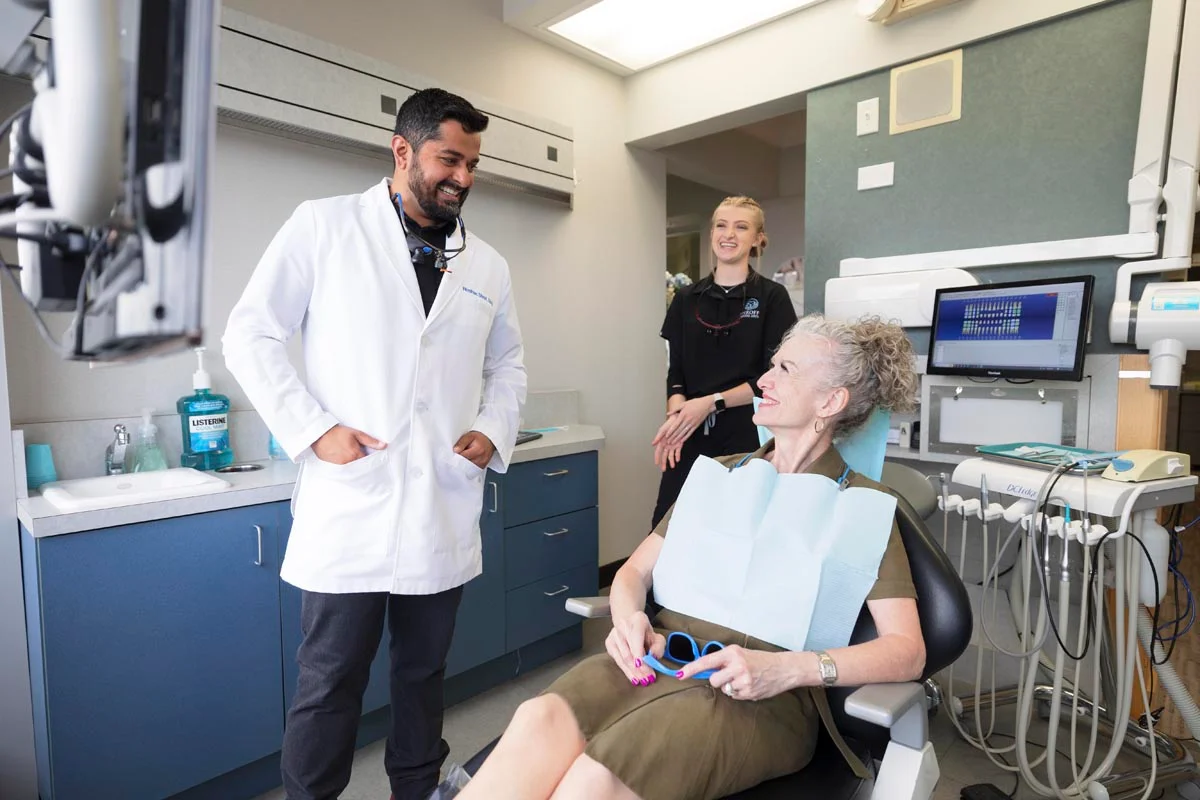
The bridge process takes more than one visit, but each appointment is focused and predictable. Here is how it works at this practice.
Your First Appointment: Exam and Treatment Planning
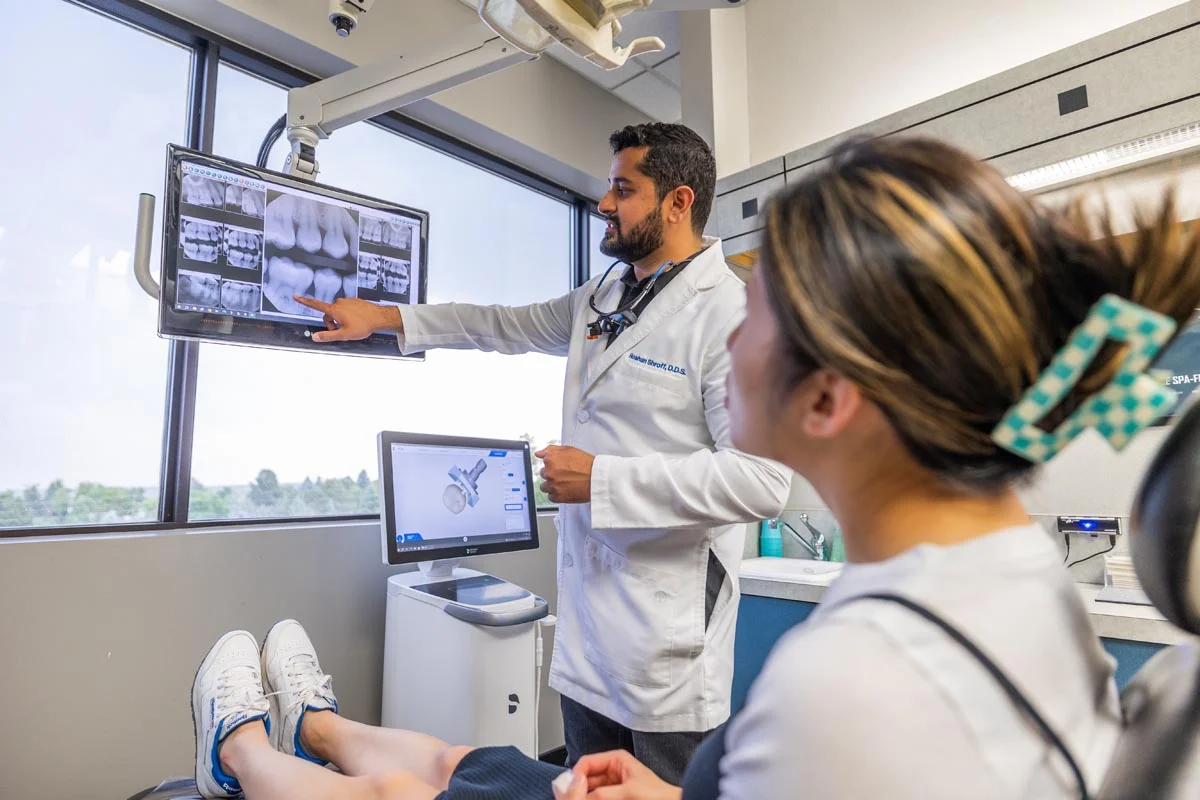
Dr. Shroff starts with a thorough exam of the gap, the neighboring teeth, and your bite. Digital X-rays and the intraoral camera give a clear picture of the bone and gum tissue underneath, so he can confirm the abutment teeth are healthy enough to support a bridge.
If everything checks out, he prepares the neighboring teeth by reshaping them slightly so the crowns will fit precisely. A PrimeScan digital scan captures the exact shape of the prepared teeth and the gap, with no goopy impression trays, and a temporary bridge is placed to protect the area while the permanent restoration is being made.
Bridge Placement and Final Fitting
When the permanent bridge is ready, you return for the second appointment. Dr. Shroff removes the temporary, seats the permanent bridge, and checks your bite carefully from multiple angles. Small adjustments are made until the fit feels completely natural. Once everything is right, the bridge is cemented in place.
Dr. Shroff explains each step before it happens and makes sure you are comfortable throughout. He also handles every step himself, from the exam and the prep to the fitting and every follow-up visit, so he already knows the full history of that tooth and its neighbors when you come back.
What Happens If You Leave a Missing Tooth Untreated
A gap in your smile is not just a cosmetic issue. Left alone, a missing tooth sets off a chain of changes in your mouth that tend to get worse over time.
The bone beneath the missing tooth no longer receives the stimulation it needs from chewing, so it begins to shrink. Neighboring teeth gradually tip or drift toward the open space, which can throw off your bite and make those teeth harder to clean. Opposing teeth may over-erupt, growing slightly into the gap from above or below. Over time, this bone loss and shifting can create crowding, jaw discomfort, and a much more complex treatment situation than a bridge would have been.
Addressing the gap sooner keeps the surrounding teeth stable and the bone intact. If a tooth extraction was recent, Dr. Shroff will advise on the right timing for bridge placement based on how the site has healed.
Bridge vs. Dental Implant: Choosing the Right Option for Your Missing Tooth
Both a fixed bridge and a dental implant are proven ways to replace a single missing tooth, and patients often ask which one makes more sense for their situation. The honest answer is that it depends on several factors: the health of the surrounding teeth, how much bone remains at the site, your timeline, and your coverage or budget. The table below lays out the main differences so you can bring informed questions to your exam.
Dental Bridge
- Treatment timeline
Two visits over a few weeks
- Bone preservation
Does not stimulate the jawbone under the gap
- Effect on adjacent teeth
Neighboring teeth are shaped to anchor the bridge
- Candidacy requirements
Healthy abutment teeth on either side of the gap
- Typical insurance coverage
Often covered at least partially by PPO plans
- Longevity
Designed to last many years with proper care
- Number of procedures
Non-surgical; two appointments
Dental Implant
- Treatment timeline
Several months (implant, healing, crown)
- Bone preservation
Root replacement stimulates bone, helping to slow bone loss
- Effect on adjacent teeth
Adjacent teeth are not altered
- Candidacy requirements
Adequate bone volume at the implant site; no uncontrolled systemic conditions
- Typical insurance coverage
Coverage varies widely; many plans cover little or none
- Longevity
Implant post is intended to be long-lasting; crown may need replacement over time
- Number of procedures
Surgical placement plus healing period plus crown
Neither option is the right answer for every patient. Dr. Shroff will walk you through which path makes the most sense based on what he finds at your exam, not a one-size-fits-all recommendation.
Dental Bridge Cost and Insurance in Centennial
Bridges are a restorative procedure, and most PPO plans treat them as such. Coverage details vary by plan, so the out-of-pocket amount will differ from patient to patient.
PPO Insurance Coverage for Bridges
Shroff Dental Arts accepts most major PPO plans, including Delta Dental, Cigna, Aetna, MetLife, UnitedHealthcare, Anthem BC/BS, and Guardian. For patients with insurance, the team can help you understand your benefits before treatment begins so there are no surprises when the claim is processed. Coverage typically applies to the bridge itself; the number of teeth involved and your plan's annual maximum both affect the final amount.
Membership Plan Option for Uninsured Patients
Patients without insurance can use the in-house membership plan to reduce the cost of a bridge. The Adult Complete Plan covers two exams and cleanings per year, routine X-rays, and one emergency exam if needed, for $40 per month. Members also receive 10% off other treatments, including restorative work like bridges (exclusions may apply). There is no waiting period and no claims process, just a flat monthly fee and a discount that applies when you need it. Ask the team for details when you call.


Frequently Asked Questions About Dental Bridges
How long does a dental bridge last?
With good daily care and regular checkups, a fixed dental bridge is designed to hold up well for many years. How long any bridge lasts depends on the location in your mouth, your bite, and how well you clean around and under it. Dr. Shroff will check the fit at every routine visit so small changes can be caught early.
Is getting a bridge painful?
The area is numbed before any work begins, so most patients feel pressure rather than pain during the procedure. Some mild soreness around the prepared teeth is normal for a day or two after the appointment. If you have concerns about comfort or anxiety, ask about sedation options when you call.
Can I get a bridge if I've had a tooth extraction recently?
In many cases, yes, but timing matters. The gum and bone in the extraction site need time to heal and stabilize before a bridge can be fitted properly. Dr. Shroff will evaluate the site at your exam and let you know when the tissue is ready, so the bridge fits accurately and comfortably.
How do I clean under a dental bridge?
A regular toothbrush handles the tops and sides of a bridge, but the space underneath needs a floss threader, interdental brush, or a water irrigator to clear out bacteria and food debris. Dr. Shroff will walk you through the exact technique before you leave the office so you feel confident doing it at home.
A bridge is also part of a broader set of restorative dentistry options at this practice. If the teeth near your gap need crowns of their own, CEREC same-day crowns are milled and placed in a single visit, which can simplify treatment planning when multiple teeth are involved.
Visit Us in Centennial
Schedule Your Bridge Exam in Centennial
Call the office today and Dr. Shroff will take a look, answer your questions, and tell you exactly what to expect from start to finish.